

One of the most important changes shaping healthcare finance today is the future of medical billing. Understanding how AI in medical billing, telehealth, and cybersecurity are transforming revenue cycle management is essential for staying competitive, ensuring compliance, and protecting your practice’s financial health.
AI in Medical Billing: A Game-Changer for Speed and Accuracy
AI in medical billing is revolutionizing healthcare revenue cycle management. Medical billing is not what it used to be. The days of manual data entry, paper-based claims, and weeks-long processing cycles are quickly becoming a distant memory. Today’s healthcare finance landscape is defined by rapid technological change, evolving regulatory demands, and an urgent need for speed, accuracy, and security.
If you are involved in medical billing or healthcare administration, understanding the emerging trends, particularly AI in medical billing, telehealth billing, and cybersecurity, is no longer optional. It’s the key to staying competitive, ensuring compliance, and safeguarding your revenue cycle.
What AI Can Do in Medical Billing
AI systems can:
- Automatically code claims: AI can analyze clinical documentation and assign the correct CPT, ICD-10, and HCPCS codes faster and more accurately than manual coding. Natural Language Processing (NLP) tools scan physician notes to extract billable services.
- Predict and prevent denials: By analyzing historical claims data, AI can identify patterns that lead to denials, such as common coding errors, missing documentation, or payer-specific requirements, and flag potential issues before submission.
- Streamline eligibility verification: AI can check patient insurance eligibility in real-time, reducing the risk of claim denials due to inactive or ineligible coverage.
- Automate payment posting and reconciliation: AI bots can post payments from Explanation of Benefits (EOB) documents automatically, matching them to the correct accounts and flagging discrepancies.
Benefits of AI in Medical Billing
The impact of AI is tangible:
- Increased efficiency: Tasks that once took hours can be completed in minutes.
- Higher accuracy: AI reduces human error, leading to cleaner claims and fewer denials.
- Cost savings: Automation reduces the need for large billing teams and decreases the cost per claim processed.
- Improved cash flow: Faster, more accurate claims mean quicker reimbursements.
Real-World Application
Many healthcare organizations are already deploying AI in medical billing through their Revenue Cycle Management (RCM) systems. For example, AI-powered platforms can analyze thousands of claims per day, identify outliers, and provide actionable insights to billing managers. According to recent CMS guidelines, implementing AI in medical billing can significantly reduce claim denials and improve reimbursement rates. This allows staff to focus on complex cases that require human judgment, while routine tasks are handled autonomously.
Challenges and Considerations
While the promise of AI is immense, implementation is not without hurdles:
- Initial investment: High-quality AI systems require upfront capital and ongoing maintenance.
- Data quality: AI is only as good as the data it’s trained on. Incomplete or inaccurate historical data can lead to poor outcomes.
- Regulatory compliance: AI systems must be regularly updated to stay compliant with changing coding standards and payer rules.
- Human oversight: AI is a tool, not a replacement. Experienced billers and coders are still essential for handling exceptions, audits, and complex cases.
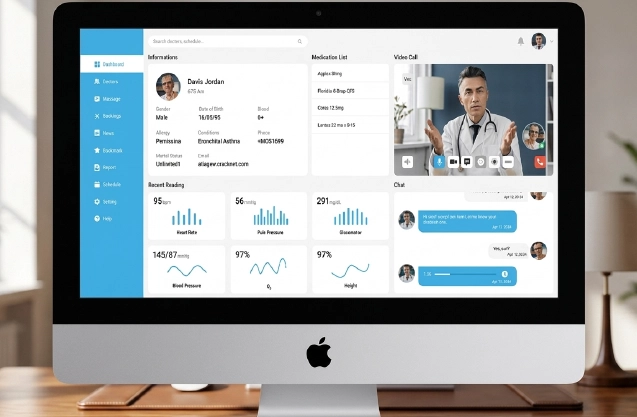
Telehealth Billing: Navigating New Codes, Compliance, and Cash Flow
The COVID-19 pandemic accelerated the adoption of telehealth, and it’s here to stay. Patients and providers alike have discovered the convenience, accessibility, and cost-effectiveness of virtual care. However, telehealth billing presents unique challenges that billing teams must master.
The Expansion of Telehealth
Telehealth is no longer limited to psychiatry or remote consultations. Today, it spans primary care, chronic disease management, post-operative follow-ups, and even certain diagnostic services. The Centers for Medicare & Medicaid Services (CMS) and private payers have expanded coverage for telehealth services, creating both opportunities and complexities for medical billing.
Understanding Telehealth CPT Codes
Telehealth billing requires knowledge of specific CPT codes designed for virtual services:
- Audio-video telemedicine codes (e.g., 99201-99215): These are evaluation and management (E/M) codes for real-time video consultations.
- Audio-only codes (e.g., 99441-99443): For telephone consultations that don’t involve video.
- Remote patient monitoring (RPM) codes (e.g., 99453, 99454, 99457, 99458): For services involving the collection and analysis of patient health data transmitted electronically.
- Virtual check-ins (e.g., G2012): Brief communications with established patients to determine if an in-person visit is needed.
Billing Challenges Specific to Telehealth
Telehealth billing introduces complexity:
- Payer variability: Not all payers reimburse telehealth services the same way. Some require specific modifiers (like -95 or GT), originating site requirements, or certain technology platforms. Medicare, Medicaid, and private insurers all have different policies.
- State-specific regulations: Telehealth regulations vary by state. Some states mandate parity (equal reimbursement for in-person and telehealth visits), while others do not.
- Documentation requirements: Providers must document the mode of delivery (audio-video vs. audio-only), consent, and location. Missing documentation can lead to claim denials.
- Temporary vs. permanent policies: Many telehealth billing flexibilities introduced during the pandemic were temporary. Keeping up with which policies have been made permanent and which have expired is critical.
Best Practices for Telehealth Billing Success
To ensure clean claims and timely reimbursements:
- Stay informed: Regularly review CMS updates, state Medicaid policies, and payer bulletins.
- Train your team: Ensure coders and billers understand telehealth-specific codes and modifiers.
- Verify coverage upfront: Before providing telehealth services, confirm that the patient’s insurance covers the service and understand any patient cost-sharing.
- Document thoroughly: Clear, detailed documentation of telehealth encounters is essential.
- Leverage technology: Use billing software that supports telehealth-specific codes and flags potential errors before submission.
Cybersecurity in Medical Billing: Protecting Patient Data and Practice Reputation
As medical billing becomes more digitized and interconnected, the risk of data breaches and cyberattacks grows. Healthcare organizations are prime targets for cybercriminals due to the high value of Protected Health Information (PHI). A single breach can result in massive financial losses, regulatory penalties, and irreparable damage to your practice’s reputation.
Why Cybersecurity Matters in Medical Billing
Medical billing involves the transmission and storage of sensitive data: patient names, dates of birth, Social Security numbers, medical histories, and insurance details. This data is transmitted between providers, clearinghouses, payers, and billing companies. Every point of transmission is a potential vulnerability.
Common Cyber Threats in Healthcare
- Ransomware: Malicious software that encrypts your data and demands payment for its release. Ransomware attacks on healthcare have surged in recent years.
- Phishing attacks: Deceptive emails or messages that trick employees into revealing login credentials or downloading malware.
- Insider threats: Employees, contractors, or business associates who intentionally or unintentionally compromise data security.
- Unsecured networks: Transmitting PHI over unsecured Wi-Fi or using unencrypted communication channels.
HIPAA Compliance and Penalties
The Health Insurance Portability and Accountability Act (HIPAA) mandates strict safeguards for PHI. Violations can result in civil penalties ranging from $100 to $50,000 per violation, with a maximum annual penalty of $1.5 million per violation category. Criminal penalties can include fines up to $250,000 and up to 10 years in prison.
Essential Cybersecurity Measures for Medical Billing
To protect your organization and your patients:
- Use encryption: All PHI must be encrypted both in transit (during transmission) and at rest (when stored).
- Implement multi-factor authentication (MFA): Require at least two forms of verification before granting access to billing systems.
- Conduct regular security training: Educate employees about phishing, social engineering, and safe data handling practices.
- Limit access: Use role-based access control (RBAC) to ensure employees can only access the data necessary for their job.
- Perform regular security audits: Identify vulnerabilities and test your incident response plan.
- Vet vendors carefully: Ensure that all billing software vendors, clearinghouses, and business associates are HIPAA-compliant and have robust security measures.
- Backup data regularly: Maintain encrypted backups that can be restored quickly in the event of a ransomware attack.
- Monitor systems continuously: Use intrusion detection systems and log monitoring to identify unusual activity in real-time.
The Cost of Inaction
The average cost of a healthcare data breach in 2023 was $10.93 million, according to IBM’s Cost of a Data Breach Report. Beyond direct financial losses, breaches erode patient trust and can lead to loss of business. Investing in cybersecurity is not just about compliance; it’s about safeguarding your practice’s future.
The Intersection of AI, Telehealth, and Security: A Holistic Approach
AI, telehealth, and cybersecurity aren’t isolated trends, they intersect and amplify each other.
- AI enhances security: AI-powered systems can detect anomalous activity, identify potential breaches, and respond to threats in real-time. They can analyze login patterns, flag unusual data access, and automatically quarantine suspicious activity.
- Telehealth requires security: As telehealth expands, ensuring that virtual visits are conducted over secure, encrypted platforms is essential. AI can help monitor telehealth platforms for vulnerabilities.
- AI supports telehealth billing: AI can automate the coding and billing of complex telehealth encounters, reducing errors and improving cash flow. It can also help verify that documentation meets payer requirements.
Preparing Your Organization for the Future
To thrive in this new era of medical billing, take these actionable steps:
- Assess your current technology: Evaluate your billing software, security protocols, and staff capabilities. Identify gaps and opportunities for improvement.
- Invest in training: Ensure your billing team is proficient in AI tools, telehealth codes, and cybersecurity best practices.
- Partner with the right vendors: Choose billing software, AI platforms, and security solutions that are proven, compliant, and scalable.
- Stay agile: The healthcare landscape is constantly changing. Build a culture of continuous learning and adaptation.
- Prioritize security: Make cybersecurity a core part of your organizational culture, not an afterthought.
Conclusion
The future of medical billing is here, and it’s defined by AI in medical billing, telehealth, and cybersecurity. These technologies are not just trends, they are fundamental shifts that will determine which healthcare organizations succeed and which fall behind. AI in medical billing offers unprecedented speed and accuracy. Telehealth expands access and creates new revenue streams. Cybersecurity protects your most valuable asset: patient trust.
By embracing these changes, investing in the right tools, and committing to ongoing education, your organization can not only survive but thrive in this new era. The question is not whether to adapt, but how quickly you can move. Start today, and position your practice at the forefront of the medical billing revolution.
Need Help With Your Billing?
Our experts can help you implement these best practices and more. Request a Free Audit today.


